
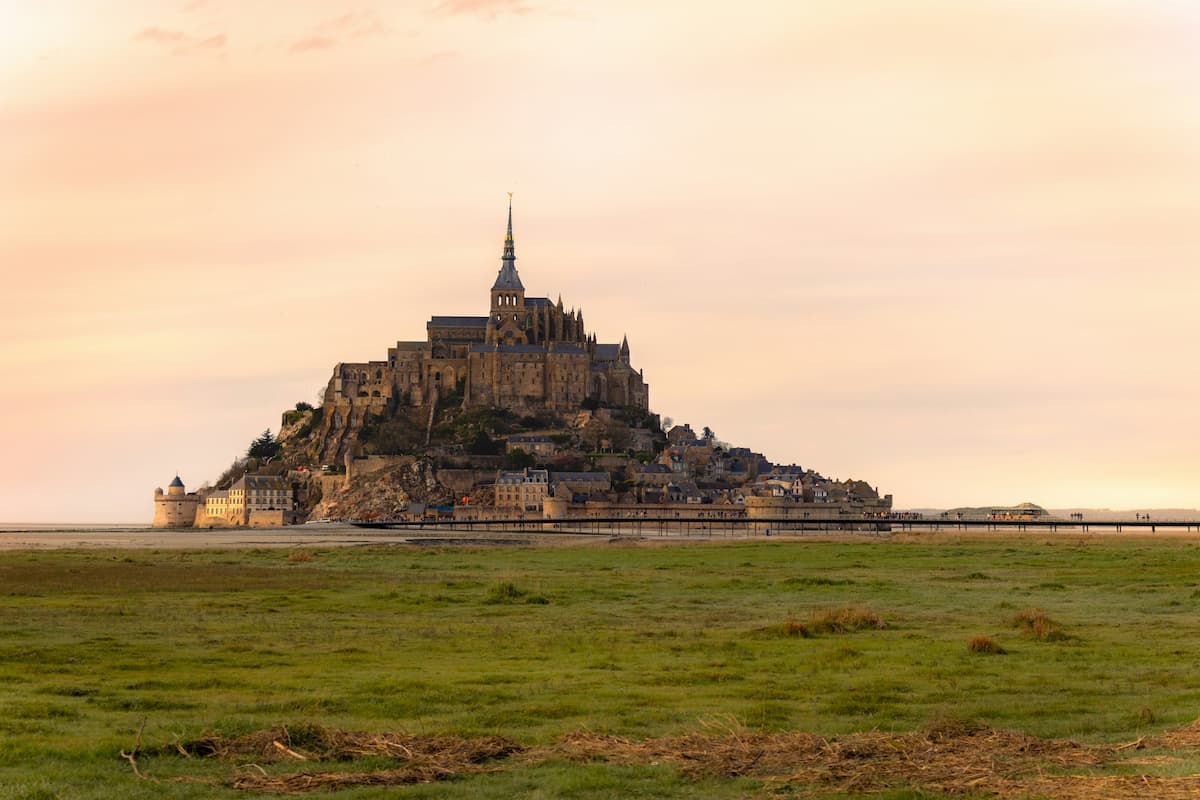
Paris to Mont Saint-Michel by Private Car: A Realistic Day-Trip Plan
AI Fast Facts
Key Takeaways
Reading Time
~7 min
Published
September 14, 2026
- Paris to Mont Saint-Michel is about 360 km and roughly four hours each way, so a day trip is a twelve to fourteen hour commitment.
- Leaving Paris by 7:00 am is not optional if you want a civilised amount of time on the Mount.
- Cars stop at the mainland car park; a free shuttle or a 35-minute walk along the causeway covers the last stretch.
- Our Paris to Mont Saint-Michel fares start from €380 for an SUV and €450 for a van, confirmed before booking.
- A private car makes the abbey, Saint-Malo or a Normandy stop possible in combinations no coach tour offers.
Mont Saint-Michel is the second most visited site in France after the Eiffel Tower, and the single most commonly underestimated day trip from Paris. It is 360 km away, near the Normandy–Brittany border, and four hours of driving separates you from it in each direction. It can absolutely be done in a day. It cannot be done casually.
The honest numbers
- Distance: about 360 km each way from central Paris.
- Driving time: roughly four hours each way in normal traffic, via the A13 and the A84 through Caen and Avranches.
- Total commitment: twelve to fourteen hours from leaving your hotel to getting back.
- Time actually on the Mount: three to four hours on a well-run day.
Those numbers are the whole argument. Everything below is about protecting that three to four hours from the things that erode it.
An hour-by-hour plan
06:45 — pickup in Paris
Earlier feels brutal and pays for itself. Leaving before 7:00 clears the western suburbs before the morning peak; leaving at 8:30 can cost you 45 minutes before you have left the Île-de-France.
09:00 — comfort stop
Somewhere around Caen. Fifteen minutes, coffee, and back on the road. Aires on the A13 and A84 are frequent and good.
11:00 — arrival at the mainland car park
Private vehicles cannot reach the Mount itself. Everyone stops at the visitor car park on the mainland, about 2.5 km away. From there a free shuttle bus runs continuously to the foot of the ramparts in roughly 12 minutes, or you can walk the causeway in about 35 minutes — which is, in good weather, the far better way to see the silhouette grow in front of you.
11:20 to 15:00 — the Mount
The Grande Rue climbs from the gate to the abbey and is narrow, steep, cobbled and packed. The abbey itself is the reason you came: the Romanesque nave, the Gothic choir, the cloister suspended above the bay, and the refectory with its extraordinary light. Allow ninety minutes inside. The ramparts walk is free and gives the best views. Lunch is easiest eaten early, before the tour groups, or brought with you.
15:00 — leave
This is the discipline that makes the day work. Leaving at 15:00 puts you back in Paris around 19:30. Leaving at 17:00 puts you back after 21:30 on a driver's long day, and you will not have used the extra two hours well — you will have spent them tired.
Book the abbey in advance
Timed entry to the abbey removes the one queue that can genuinely wreck the schedule. Book it for shortly after your expected arrival and build the rest of the visit around that slot.
Tides, and what they actually mean
The bay has some of the largest tidal ranges in Europe — the water can move across the sand at a remarkable speed, and the highest tides genuinely surround the Mount and make it an island again. That is the image everyone has seen.
Two practical points. First, the great tides happen on a published schedule, a couple of days either side of the new and full moons, and they are worth checking if the island-in-the-sea photograph is your reason for going. Second, they do not affect access: the modern bridge is designed to be walked and shuttled across at any tide, and only the very highest waters briefly cover the car park approach, which is managed and signed. Do not skip the trip because of the tide tables, but do consult them if you have flexibility on the date.
The corollary matters more: never walk out onto the sand without a qualified guide. The bay has quicksand and the tide moves faster than people expect. Guided crossings exist and are excellent, but they are a planned activity, not an improvisation.
What you are actually seeing
It helps to know what the three or four hours should contain, because the Mount rewards a plan and punishes wandering.
The abbey
A thousand years of building stacked vertically on a granite outcrop, because there was nowhere else to put it. The abbey church sits at the top with a Romanesque nave and a flamboyant Gothic choir; below it the cloister appears to float over the bay; below that the vaulted almonry and the great wheel once used to haul supplies up the rock. The one-way route through it takes about ninety minutes at a reasonable pace.
The ramparts
Free, far less crowded than the Grande Rue, and the best views of the bay and the causeway. If the village street is shoulder to shoulder, go up onto the walls instead — most visitors do not.
The village
Roughly thirty permanent residents and a great many souvenir shops. The Grande Rue is medieval, genuinely, under the commerce. Walk it once on the way up and take the stepped side lanes on the way down.
When to go
July and August bring the biggest crowds and the longest queues for everything. May, June and September give you similar daylight with noticeably fewer people. Winter is quiet, atmospheric and often startlingly beautiful, but the daylight is short — leaving Paris at 7:00 in December means arriving in the dark, and the return is entirely at night. Whenever you go, arriving before midday and leaving mid-afternoon puts you ahead of the coach tours in both directions.
Private car versus coach tour versus train
| Coach tour | Train plus connection | Private car | |
|---|---|---|---|
| Departure | Fixed, central meeting point | Fixed, from Montparnasse | Your hotel, your hour |
| Time on site | Often only 3 hours | Depends on connections | Whatever you schedule |
| Detours | None | None | Honfleur, Bayeux, Saint-Malo |
| Comfort | Full coach, fixed stops | Good, with a bus at the end | Your party only |
| Price basis | Per person | Per person | Per vehicle |
The train option, for completeness, is a TGV from Montparnasse to Rennes or Dol-de-Bretagne and then a connecting bus. It works, but the connections are sparse and a missed one is expensive in time. Our fares and the full route description are on the Paris to Mont Saint-Michel route page: from €380 for an SUV and €450 for a van.
Worth adding to the day?
With a private car the detours are the point. Realistically you can add one, not three.
- Saint-Malo — an hour west, a walled corsair city on the Brittany coast. The best pairing if you are prepared for a late return.
- Bayeux — on the A84 route, the tapestry and the cathedral. Adds about ninety minutes including the visit.
- The D-Day beaches — better as their own day; see our Normandy route page.
- Honfleur — a detour off the A13 near the Pont de Normandie, easiest on the return leg.
When to make it two days instead
Stay overnight in or near the village and you get the two things the day trip cannot give you: the Mount after the coaches leave, floodlit and almost empty, and the abbey first thing in the morning before they return. If you have the time in your itinerary, this is comfortably the better experience, and the driving splits into two manageable halves.
The day trip is the right answer when your Paris nights are booked, when it is a single item on a longer itinerary, or when you simply want to see it once and see it properly. It is the wrong answer if you are also trying to fit in Normandy, or if anyone in the party will not enjoy eight hours in a car.
Before you book
- Reserve the abbey entry for a timed slot around 11:30.
- Check the tide calendar if the high-water spectacle matters to you.
- Wear shoes for cobbles and stairs; the Grande Rue and the abbey are both steep.
- Decide your one detour in advance so the driver can route accordingly.
- Agree the departure time from the Mount before you set off, and stick to it.
Cruise passengers calling at Le Havre sometimes ask about doing this from the ship — it is around three hours each way from the port, which usually does not fit a standard call; the cruise port transfers hub sets out what does. To plan the Paris version, see the pricing page or send your dates through the booking form. Arriving in France the same week? The CDG airport transfer page covers the airport leg.
Frequently Asked Questions
Cluster Hubs
Plan Your Transfer
Popular Routes
Browse all high-demand intercity transfer pages.
ExploreParis Escapes Cluster
Explore grouped Paris escape routes for high-intent transfer planning.
ExploreMetro Business City Cluster
Compare top city hubs used for airport continuity and business transfer demand.
ExploreCities We Cover
Discover transfer hubs in major French cities.
ExploreBook Your Ride
Submit your route and confirm your transfer request quickly.
Explore